Thinking about selling raw land in Williamson County? You are not alone, and you are not wrong if the process feels less straightforward than selling a house. With land, buyers want answers about access, septic, utilities, zoning context, and paperwork before they are willing to make a serious move. The good news is that a little preparation can make your property easier to understand, easier to market, and easier to price. Let’s dive in.
Start With The Right Records
Before you think about photos, signage, or pricing, gather the records that help explain what your land is and how it can be used. In Williamson County, that usually starts with your deed, legal description, parcel number, and the most recent survey or plat.
These documents help confirm basic facts that buyers will ask about right away. If acreage, boundaries, easements, or access points are unclear, a current survey can be especially helpful because it gives buyers a cleaner picture of the tract.
You should also pull any recorded covenants, easements, or plat notes tied to the property. Those items can affect access, future division, and how a buyer may use the land.
Check Greenbelt Status Early
If your land is enrolled in greenbelt, do not leave that for the last minute. Williamson County taxes qualifying greenbelt land based on present use rather than market value, and new owners must reapply.
A sale or change in use can also trigger rollback taxes. Since rollback is a recapture of past tax savings, it can affect your net proceeds and should be part of your planning before the property goes live.
Verify Access Before Marketing
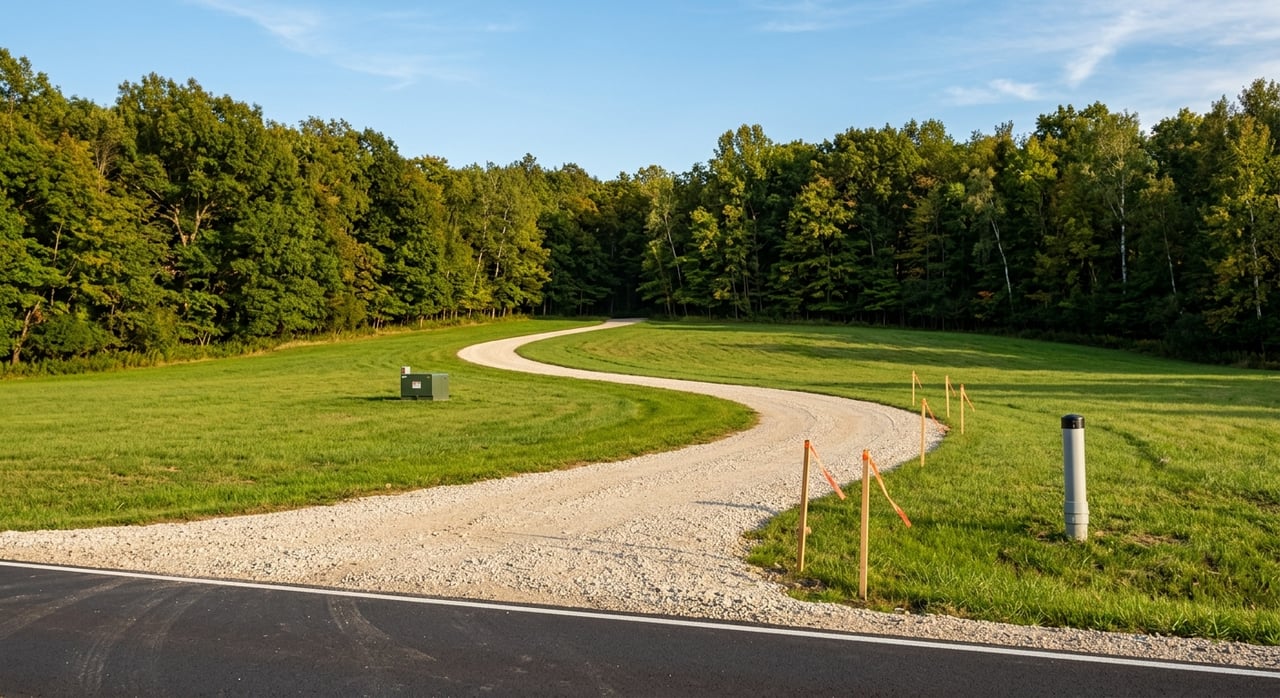
Access is one of the biggest issues in a raw-land sale. A beautiful tract can still be hard to sell if buyers cannot clearly understand how they legally get to it.
In unincorporated Williamson County, subdivision regulations define a driveway easement as a 25-foot-wide easement from a public road for ingress and egress. The county also makes an important distinction here: a private driveway is not a public road and is not maintained by the county.
That matters because buyers often assume any visible drive functions like road frontage. If your tract depends on an easement, it is smart to document that clearly and describe it accurately from the start.
Confirm Utilities, Septic, And Drainage
Raw land buyers in Williamson County often focus on the same practical questions: Can I get water? Will it support septic? Are there drainage or floodplain issues? Those answers can shape both price and buyer confidence.
If the property has an existing well or septic system, gather whatever records you have and make them easy to review. If those systems are not in place, do not assume they will be simple to add. Septic review is especially important in Tennessee because a septic permit should be obtained before dirt work or construction begins, including the building pad.
If the tract may be divided into two or more lots or sites for future construction using septic, a subdivision evaluation is required. That is why septic questions are not just technical details. They can directly affect whether a parcel is ready for one home, multiple lots, or limited use.
Drainage matters too. Williamson County’s plan-review system includes land disturbance permits and floodplain development permits, and the county advises property owners to check FEMA flood maps and floodplain status when low areas or drainage features are present.
For larger tracts, utility availability should also be confirmed early. County plat approval may require utility-system sign-off showing agreement to supply water, so it is better to verify service than to assume it exists.
Understand County Planning Context
Not every raw tract should be marketed with the same future-use story. In Williamson County, land-use questions are shaped by zoning, subdivision rules, and long-range planning documents for unincorporated areas.
The county’s GIS tools can help identify zoning districts and basic parcel information. The county also has a Comprehensive Land Use Plan and several special area plans, including College Grove, Leiper’s Fork, Grassland, and Triune.
If your parcel falls inside one of those planning areas, that context matters before you describe subdivision potential or future development options. It is also important to remember that county rules cited here apply to unincorporated Williamson County, so land inside a city needs separate confirmation.
Know When A Survey Or Plat Helps
You do not always need a brand-new survey before listing, but it can be one of the most useful tools in the process. If your boundaries are unclear, if acreage is in question, or if access and easements are hard to interpret, a current survey can reduce confusion and speed up buyer due diligence.
A measured parcel map also helps with marketing because buyers can better understand shape, dimensions, road relationship, and possible building areas. On raw land, clarity is often what turns interest into action.
Be Careful About Splitting The Land
Many sellers assume they can divide acreage first and market smaller pieces later. In Williamson County, that is not just a sales decision. It can also be a planning, platting, septic, road, and drainage question.
The county’s subdivision regulations require written approval of final plats before recording. Road and drainage plans must also be approved before final plats are heard.
That does not mean division is impossible. It means you should treat it as a county process and confirm requirements with the right local professionals before advertising the tract as divisible.
Focus Cleanup On Readability
When sellers prepare a house, they deep clean and stage. With raw land, the goal is different. You want the property to be easy to read without creating new permit issues or unnecessary disturbance.
Light cleanup often works best. That may include selective trimming, marking trails or access points, flagging property features, and making usable ground easier to see.
In many cases, over-clearing can do more harm than good. If grading, clearing, or dirt work could raise permit, erosion, or stormwater concerns, it is usually better to keep improvements modest and strategic.
Present The Land Clearly
A good raw-land listing should answer practical questions fast. Buyers usually want to know where the access is, how much of the acreage appears usable, whether a survey exists, what restrictions may apply, and whether septic, well, or utility information is available.
If the tract has a farm or mini-farm feel, highlight factual features such as open ground, tree cover, existing improvements, and access layout. Keep the presentation grounded in what is documented rather than what is hoped for.
This is especially important in Williamson County, where plats, easements, septic review, and land-use planning can all shape what a buyer can actually do with the property. Clear presentation builds trust and helps reduce wasted showings.
Price Raw Land Differently Than A House
One of the biggest mistakes land sellers make is looking at nearby home sales and assuming the same pricing logic applies. It usually does not.
Williamson County’s Assessor uses a market approach based on comparable sales and evaluates parcels by characteristics such as size, quality, and location. For raw land, pricing should be based on comparable land sales plus parcel-specific factors like usable acreage, access, utilities, topography, and restrictions.
Greenbelt status may also affect your pricing strategy and net sheet if rollback taxes are in play. A tract with uncertain access, unknown septic capacity, or unresolved restrictions may need a different pricing approach than one with strong documentation and fewer unknowns.
Build Your Team Before You List
Selling land often goes more smoothly when you bring in the right experts early. Depending on the tract, that may include a surveyor, title company, septic reviewer, utility provider, planner, or attorney.
The goal is not to overcomplicate the sale. It is to answer the questions that serious buyers are already going to ask, so your property is positioned as ready, understandable, and credible.
If your end buyer may be planning a new home on the site, preparation matters even more. Buyers looking at factory-built or modular housing often want a clearer path from land purchase to site readiness, permitting coordination, and installation planning.
Why Preparation Pays Off
In Williamson County, raw land is rarely just about how many acres you own. Buyers want to know whether the tract is legally accessible, reasonably buildable, and aligned with county rules for its location.
When you gather records, verify access, check septic and utility questions, handle light cleanup, and price from land-specific facts, you make it easier for buyers to say yes. You also protect yourself from avoidable surprises later in the transaction.
If you are preparing land for a future home site and want guidance from a team that understands the path from homesite planning to factory-built housing options, Lisa Alyn can help you take the next step with confidence.
FAQs
What documents help sell raw land in Williamson County?
- The most useful starting documents are your deed, legal description, parcel number, recent survey or plat, and any recorded easements, covenants, or plat notes.
Does greenbelt status matter when selling land in Williamson County?
- Yes. Greenbelt land is taxed on present use, new owners must reapply, and a sale or change in use may trigger rollback taxes.
Is a private driveway the same as public road frontage in Williamson County?
- No. Williamson County states that a private driveway is not a public road and is not maintained by the county.
Do I need a new survey before listing raw land in Williamson County?
- Not always, but a current survey is especially helpful when boundaries, acreage, access, or easements are unclear.
Can I split my Williamson County land before listing it?
- Possibly, but land division is a county-process question that may involve subdivision rules, plat approval, septic review, road plans, and drainage review.
Why do septic and drainage matter when selling raw land in Williamson County?
- They affect whether the land may support future construction, and county review may be needed for septic, floodplain, or land disturbance issues before development moves forward.