If you picture Williamson County as all polished suburbs and busy growth corridors, Leiper’s Fork may surprise you. This small village in the 37064 area moves at a different pace, with art galleries, live music, scenic roads, and land that still feels connected to the countryside. If you are looking for a place that feels creative, rural, and relaxed, this guide will help you understand what daily life here can look like. Let’s dive in.
What makes Leiper’s Fork distinct
Leiper’s Fork is best understood as a rural village rather than a suburban extension of Franklin. Williamson County’s special area plan describes the community as generally rural, with a mix of agricultural, commercial, institutional, and residential uses, along with preserved historic structures and natural buffers.
That setting shapes the way the village feels when you arrive. The Natchez Trace Parkway forms a protective edge for the area, helping preserve open space and views, while the village itself sits about 8 miles from Franklin. You get access to Franklin nearby, but Leiper’s Fork keeps a character all its own.
Village life feels simple and close-knit
One of the clearest lifestyle differences in Leiper’s Fork is the compact village core. Local visitor information describes several lodging spots as being a short stroll from boutiques, galleries, dining, and live music, which points to an area where walking is part of the everyday rhythm.
That matters if you want a place where errands and downtime can blend together. Instead of a schedule built around traffic and big retail centers, life here may center more on a walk into the village, time on a porch, or an easy stop for lunch and music.
Arts shape the local culture
Leiper’s Fork has a strong creative identity, and that is not just marketing language. Galleries are a visible part of the village, giving the area an arts-focused feel that stands out in Williamson County.
Leiper’s Creek Gallery features a range of work from painting to sculpture and also includes gathering spaces like a porch, fire pit, and lawn-chair theater. The Copper Fox is housed in a restored 1860s home and features work by more than 90 artists, while David Arms Gallery is set in a renovated barn at the edge of the village.
For you as a buyer, that creative presence can influence how the area feels day to day. It adds texture, personality, and a sense that the village is designed around local expression rather than formula.
Music and dining stay local
Music is another key part of Leiper’s Fork living. Fox & Locke, a longtime local gathering place originally established in 1947, serves breakfast, lunch, and dinner and hosts live music on Wednesday, Friday, and Saturday, along with open mic night on Thursday.
The dining scene also reflects the village’s laid-back identity. Visit Franklin describes The Country Boy as the oldest diner in Williamson County, which reinforces the fact that Leiper’s Fork leans casual, local, and rooted rather than chain-driven.
That local-first feel continues in food and drink. Leiper’s Fork Distillery focuses on small-batch spirits made with local ingredients and limestone-filtered water, Crown Winery offers creekside tastings in the village, and nearby destinations include Southall Farm & Inn and GratiDude Ranch with monthly farm-to-table dinners.
Scenic drives are part of the lifestyle
The outdoor rhythm in Leiper’s Fork is tied closely to the Natchez Trace Parkway. The National Park Service describes the Parkway as a 444-mile scenic drive that also supports hiking, biking, horseback riding, and camping.
Leiper’s Fork sits just off Milepost 428, which helps explain why the area is so connected to slow drives and unhurried afternoons. County planning documents also note that the Parkway provides scenic viewpoints and open-space protection, adding to the preserved feel of the landscape.
If you want a place where the drive home feels like part of the reward, this setting stands out. The roads, views, and surrounding land all support a pace that feels more intentional and less rushed.
Equestrian access is more than a theme
Leiper’s Fork often gets associated with horses, and that connection has real substance. The nearby Highland Rim section of the Natchez Trace National Scenic Trail is about 25 miles long and lies one mile south of Tennessee Highway 46 near the Leiper’s Fork community.
The National Park Service confirms there are hitching posts in picnic areas along that trail section. It also states that horses are allowed only on designated trail and staging areas, which is important if you are considering the area for equestrian recreation.
This kind of access supports the area’s identity as a fit for horse properties and land-based living. It is one more reason Leiper’s Fork appeals to buyers who want space for outdoor interests, not just a house lot.
Home sites often offer more land
Housing in Leiper’s Fork is shaped by lot size and land use in a way that differs from many suburban communities. In Williamson County’s zoning ordinance, the Leiper’s Fork Village general subarea has a 1-acre minimum lot area.
Beyond the village core, the RP-5 rural preservation district is designed to protect rural character through agricultural, rural, and low-density residential development. In that district, traditional subdivisions are set at 5 acres, with a density of 1 unit per 5 acres.
For you, that can translate to a very different housing search. Instead of focusing only on neighborhood amenities, you may be thinking about acreage, outbuildings, privacy, access, and how you want the land around your home to function.
Larger parcels can support rural uses
If you are drawn to hobby farming, retreat-style living, or horse property, county standards matter. Williamson County’s greenbelt program generally requires agricultural land to be 15 acres or more and actively farmed.
The county’s rural-retreat standards also begin at 15 acres and may include equestrian facilities as an incidental recreational use. Those thresholds help explain why Leiper’s Fork is often a natural match for buyers looking at larger parcels with more flexibility for land-based living.
This does not mean every property will fit that mold, but it does show how the area supports a broader range of lifestyles than a conventional subdivision typically would.
The housing feel is porch-and-barn
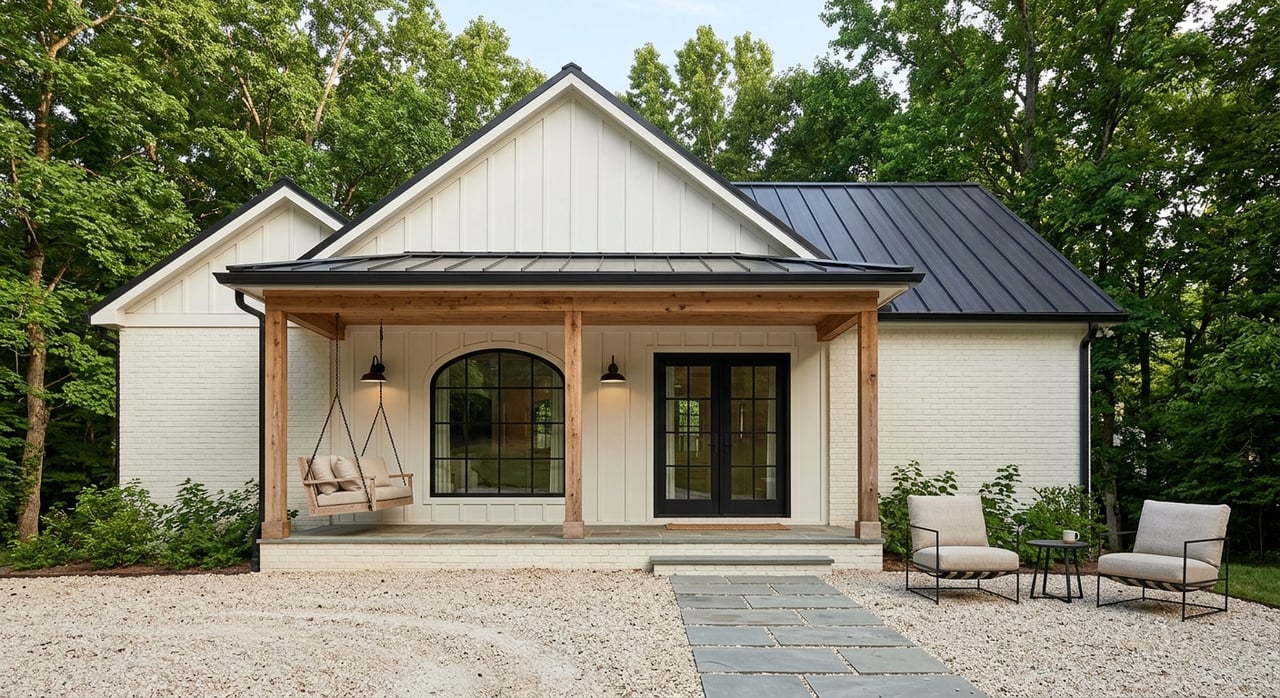
Local lodging offers a useful glimpse into the kinds of home settings that feel natural in Leiper’s Fork. Tin Roof Cottage sits on a corner acre lot and is styled as a Victorian farmhouse, while Leiper’s Fork Inn occupies three acres and combines two early-1900s homes.
Full Circle Farm Inn is a working farm with horse paddocks and welcomes guests traveling with horses. GratiDude Ranch is a mini-farm with multiple dwellings. Together, these examples suggest a local housing culture shaped by porches, barns, outbuildings, acreage, and indoor-outdoor living.
If that is the kind of atmosphere you want, Leiper’s Fork offers a clear contrast to tighter suburban development patterns. The setting often feels more pastoral and personal.
Who Leiper’s Fork may suit best
Leiper’s Fork can appeal to several kinds of buyers, especially if lifestyle matters as much as square footage. You may feel at home here if you want a quieter daily pace, a stronger connection to land, or a setting that supports creative and outdoor interests.
It may also fit if you are considering a retreat property, a weekend place, or a home with more breathing room. The area’s pattern of village walkability, scenic drives, and larger-lot living creates a lifestyle that is less about rushing and more about choosing how you spend your time.
What to keep in mind as you plan
If Leiper’s Fork is on your radar, it helps to think beyond the house itself. Lot size, zoning context, access to the village, and how you want to use the land can matter just as much as floor plan or finishes.
This is also where a well-planned home approach can make a difference. For buyers exploring factory-built or modular options, having a clear path for design, quality control, warranty coverage, and installation coordination can be especially helpful when you are planning for a rural or larger-lot setting.
A builder with a range of options can also help you match the home to the property. Whether you are thinking about a lower-maintenance retreat, a full-time residence with more space, or a custom home approach, the goal is to choose a solution that fits the land and the lifestyle.
If you are exploring what Leiper’s Fork living could look like on your land, Lisa Alyn can help you take the next step with a practical, well-supported path forward.
FAQs
What is daily life like in Leiper’s Fork, Tennessee?
- Daily life in Leiper’s Fork often centers on short village walks, gallery visits, local dining, live music, scenic drives, and time spent enjoying larger lots or rural surroundings.
How far is Leiper’s Fork from Franklin, Tennessee?
- Visit Franklin places Leiper’s Fork about 8 miles from Franklin, making it close enough for access while still feeling separate in character.
What makes Leiper’s Fork appealing for horse owners?
- The area is near the Highland Rim section of the Natchez Trace National Scenic Trail, which is about 25 miles long and includes hitching posts in picnic areas, with horse use allowed on designated trail and staging areas.
What are typical lot sizes in Leiper’s Fork?
- In the Leiper’s Fork Village general subarea, the county zoning ordinance sets a 1-acre minimum lot area, while some nearby rural preservation areas are planned around 5-acre patterns.
Can larger properties in Williamson County support agricultural or equestrian use?
- Williamson County states that agricultural land in the greenbelt program generally must be 15 acres or more and actively farmed, and rural-retreat standards also begin at 15 acres and may include equestrian facilities as an incidental recreational use.
Is Leiper’s Fork more suburban or rural?
- Williamson County’s planning documents describe Leiper’s Fork as generally rural, with preserved historic structures, natural buffers, open-space protection, and a mix of agricultural and residential uses.