Thinking about buying land or a mini-farm in Williamson County? It can be exciting to picture open space, a home site, a few animals, or a place to build your next chapter. But in this county, the details matter fast, because zoning, septic, access, and tax rules can change from one parcel to the next. This guide will help you understand what to check before you buy and how to move forward with more confidence. Let’s dive in.
Why Williamson County Land Is So Parcel-Specific
Williamson County is not one simple land market. What you can do with a parcel often depends on whether it sits in unincorporated county jurisdiction or inside a town such as Nolensville.
The county planning department handles zoning and subdivision questions for unincorporated areas. Nolensville has its own zoning ordinance, planning department, and annexation process, so buyers near town limits should confirm exactly which rules apply to the property they want.
Special area plans also shape what land can become. Places like Leiper’s Fork and Arrington are treated as distinct planning areas, which means two properties with similar acreage may have very different development paths.
Know the County’s Micro-Markets
Franklin and Leiper’s Fork
Listings in and around Franklin and Leiper’s Fork show how wide the price range can be. Current examples in the research include 6.67 acres at $1.1 million, a 24.74-acre farmstead at $4.995 million, and a 338-acre estate at $15.5 million.
That spread shows an important point: acreage alone does not set value. Improvements, location, planning constraints, and build-readiness can all change pricing.
Leiper’s Fork also has a dedicated Village District intended to preserve small-town character and protect open space and natural resources. If you are drawn to that area, be ready for a planning framework that is more tailored than a basic rural zoning check.
Arrington
Arrington is described by the county as rural in character, with a village center made up of 37 parcels and about 325 acres. The broader planning area covers about 25 square miles and has its own adopted plan.
Current listing examples suggest that smaller, build-ready tracts may carry higher per-acre prices than larger raw parcels. In other words, a smaller parcel that already clears key hurdles may cost more per acre than a larger tract that still needs major due diligence.
Nolensville
Nolensville is a different kind of land search because it has an active municipal planning environment. Buyers should verify whether a parcel is already in town limits or could be affected by future annexation and service changes.
That matters because municipal status can affect zoning, approvals, and holding costs. Before you rely on a listing description, confirm the parcel’s current jurisdiction and any nearby planning activity.
Zoning Comes Before Your Vision Board
It is easy to fall in love with a property based on scenery, road frontage, or a good price per acre. In Williamson County, though, zoning needs to come first.
The county is not uniformly rural, and the zoning district matters more than the photos. A parcel may look perfect for a mini-farm, but the legal use of that land depends on the zoning map, the ordinance, and any applicable area plan.
Agricultural and Rural Districts
Williamson County includes a voluntary Agricultural district with a 15-acre minimum lot area. That district is intended to protect agriculture and allow uses such as agriculture, horticulture, animal husbandry, and related support uses.
Other rural districts can be less restrictive in some parts of the county. The research report notes that RP-5 west of I-65 and RD-5 east of I-65 both allow 5-acre traditional subdivisions.
That is why acreage by itself is not enough. Five acres in one district may function very differently from five acres in another.
Ask These Zoning Questions Early
Before you make an offer, confirm:
- Whether the parcel is in county or town jurisdiction
- The exact zoning district
- Minimum lot size requirements
- Whether the intended use is allowed
- Whether future lot splits or re-subdivision may be limited
- Whether a special area plan applies
Williamson County provides zoning inquiries and interactive maps for parcel-level research in unincorporated areas. Those tools are a strong starting point, but they should support, not replace, direct verification.
Greenbelt Can Affect Your Holding Costs
If you are buying land for agricultural use, greenbelt status can have a major impact on property taxes. But you should never assume a parcel will qualify just because it is large or because the seller mentions greenbelt.
According to Williamson County, agricultural land must be at least 15 acres, must actually be engaged in agricultural activity, and cannot qualify based only on future plans to farm. The county also cites a $1,500 average annual gross farm income presumption over any three consecutive years.
If land is removed from greenbelt, rollback taxes may apply. Buyers should also know that if a property is already in greenbelt, a new owner must reapply.
What to Verify About Greenbelt
Use this checklist before closing:
- Whether the property is currently enrolled
- Which classification applies
- Whether the current use supports continued eligibility
- Whether you will need to reapply after purchase
- Whether your planned use could trigger rollback taxes
Property tax rates can also vary based on county and municipal location. If you are comparing land in Franklin, Nolensville, Arrington, or unincorporated areas, make sure your tax assumptions match the parcel’s actual location.
Buildability Starts With Soil and Septic
For many land buyers, the biggest question is simple: can you actually build on it? In Williamson County, that answer often starts underground.
Soil Review Matters
USDA’s Web Soil Survey is the official source for soil survey information, including data relevant to building-site development and engineering uses. For a mini-farm, that gives you an early view of site conditions before you spend heavily on design or planning.
If you plan to grow anything, soil testing also matters for land management. UT Extension guidance recommends composite samples rather than a single scoop, and for key nutrients and pH it calls for a 6-inch sampling depth.
Septic Can Be a Gatekeeper
If the parcel is not on sewer, septic is usually the next major checkpoint. Tennessee requires a Septic System Construction Permit for new installation or repair of a faulty system, and Williamson County’s sewage disposal office regulates onsite septic systems to protect public health, groundwater, and the environment.
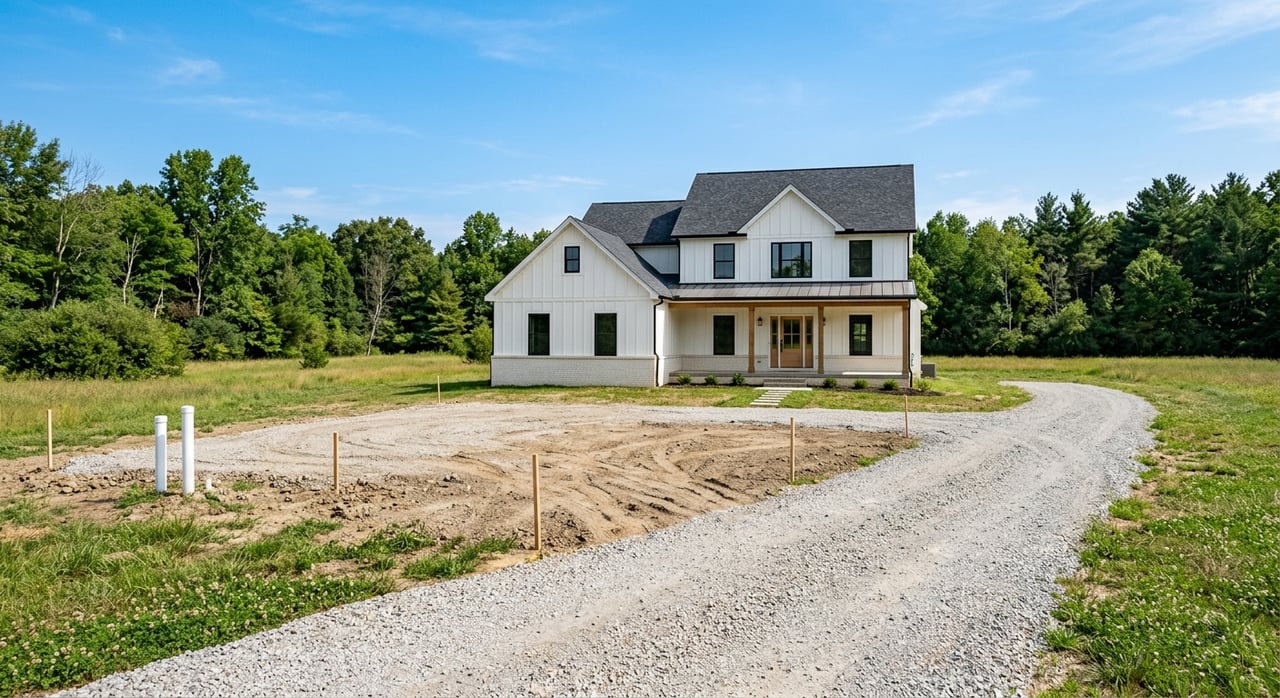
For practical purposes, you should confirm soil suitability, reserve area, and septic permitability before closing if the parcel is meant for a house or future homesite. A pretty field is not the same thing as a buildable site.
Wells Need Their Own Review
If the property will rely on a private well, Tennessee requires state-licensed drillers, pump installers, and water-treatment installers. The state also notes that private water-supply sampling requirements may come from your lender or another third party rather than from a universal state testing rule.
That means your lender should be part of the due diligence conversation early. Ask what testing, if any, will be required for financing.
Access, Surveys, and Utilities Matter More Than Listings
A map photo or listing description can make a parcel look straightforward. In reality, access and boundary issues can change the whole picture.
County and town GIS maps can help you review parcel lines, zoning, and other layers. Still, they do not replace a title search, survey, deeded access review, or easement review.
This is especially important in a county where subdivision is regulated and rural parcels may face limits tied to road frontage, utility easements, or future splitability. If your goal is a mini-farm with a home, a barn, or room for future planning, these details deserve early attention.
A Smart Buy Order for Williamson County
When you buy land, the safest path is not to start with the dream. Start with the constraints.
Here is a practical order based on the research:
- Identify whether the parcel is in county or town jurisdiction
- Verify zoning district, lot size, and allowed uses
- Check whether greenbelt is realistic for your intended use
- Review soil, septic, and well considerations
- Confirm access, survey, easements, and utility availability
- Line up financing and realistic tax assumptions before the offer becomes binding
This order helps you avoid the most common land-buying mistake: paying for potential that the parcel does not legally or physically support.
Financing a Land or Mini-Farm Purchase
Financing depends on what you plan to do with the property. If you intend to operate a real farm rather than simply own acreage, USDA Farm Service Agency programs may be relevant.
The research report notes that FSA direct and guaranteed farm ownership and operating loans can be used for land, livestock, equipment, feed, seed, supplies, and farm improvements. Current direct farm ownership loans have a maximum amount of $600,000, and direct loan applicants must be family-size farmers or ranchers who cannot obtain commercial credit elsewhere.
Because land financing can vary widely, it is smart to talk with your lender early about septic requirements, well testing, down payment expectations, and how the property’s intended use may affect the loan.
Where Factory-Built Housing Fits In
If you are buying land with plans to place a new home on it, your homesite due diligence should come first. Zoning, lot size, septic, well access, and utility planning all need to line up before you move too far into home selection.
That is where a clear, step-by-step process matters. If your parcel is a fit for a new factory-built or modular home, understanding site conditions early can help you plan more confidently for permitting, installation coordination, and the path from land purchase to move-in.
A predictable homebuilding path is especially valuable on rural or semi-rural land, where site work and approvals can affect timeline and budget. The more clearly you understand the parcel, the easier it is to make smart housing decisions.
If you are exploring a land purchase in Williamson County and want to pair it with a new home plan, Lisa Alyn can help you think through the next steps.
FAQs
What should you check before buying land in Williamson County?
- Confirm the parcel’s jurisdiction, zoning district, minimum lot size, allowed uses, greenbelt status, soil conditions, septic potential, access, survey details, easements, utilities, and tax assumptions before your offer becomes binding.
Can you keep animals on a mini-farm in Williamson County?
- It depends on the parcel’s zoning district and applicable local rules. Do not rely on the listing alone. Verify allowed uses directly through the zoning map and planning department.
How many acres do you need for greenbelt in Williamson County?
- Williamson County says agricultural land must be at least 15 acres, must actually be engaged in agricultural activity, and cannot qualify based only on a plan to farm in the future.
Can you build a house on raw land in Williamson County?
- Possibly, but you need to verify zoning, lot size, soil suitability, septic permitability if sewer is unavailable, access, and utility availability. A parcel that looks buildable may still have important limits.
Why does Nolensville land require extra review?
- Nolensville has its own zoning ordinance, planning department, zoning map, and annexation process. If a parcel is in or near town limits, municipal rules and future service changes may affect your plans.
Does a GIS map replace a survey or title review for Williamson County land?
- No. GIS maps are useful for basic research, but they do not replace a title search, survey, deeded access review, or easement review.